Kingston Street - Blade
Reason for the name
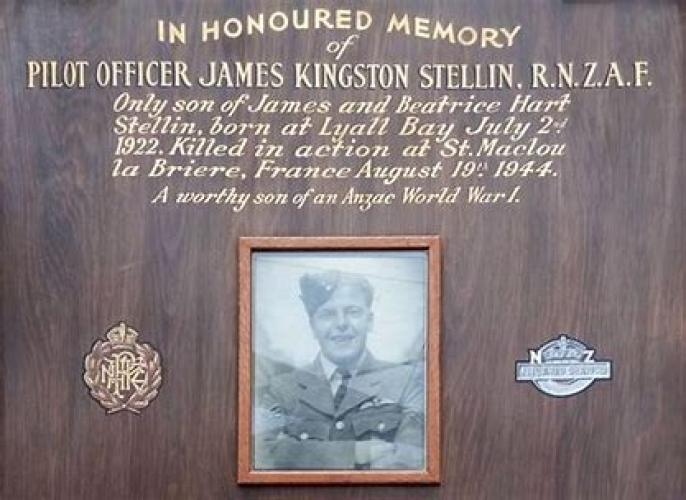
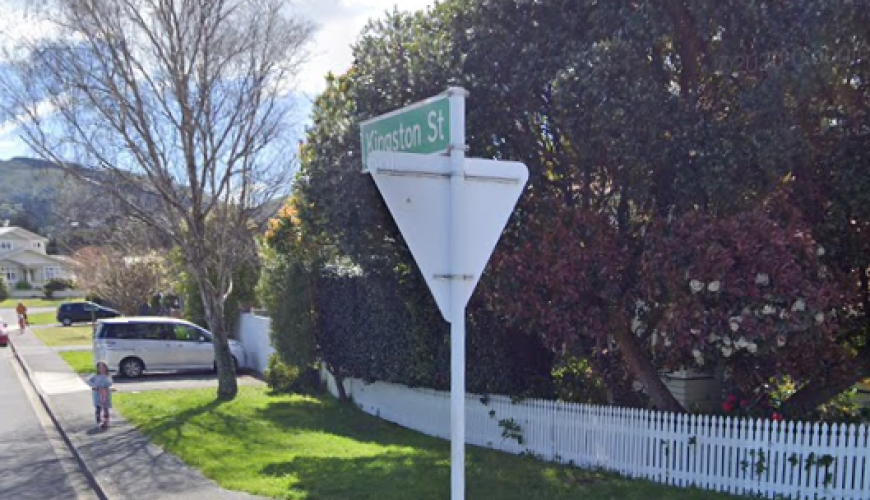
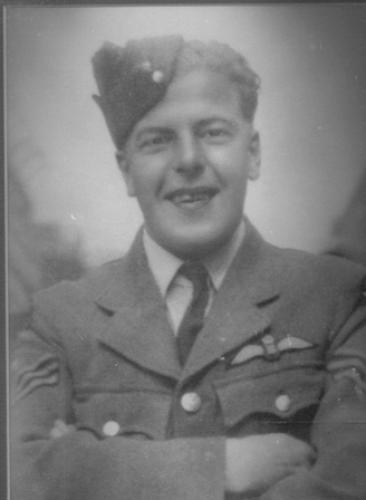
Kingston Street is named after Pilot Officer James Kingston Stellin killed in action in France 19 August 1944.
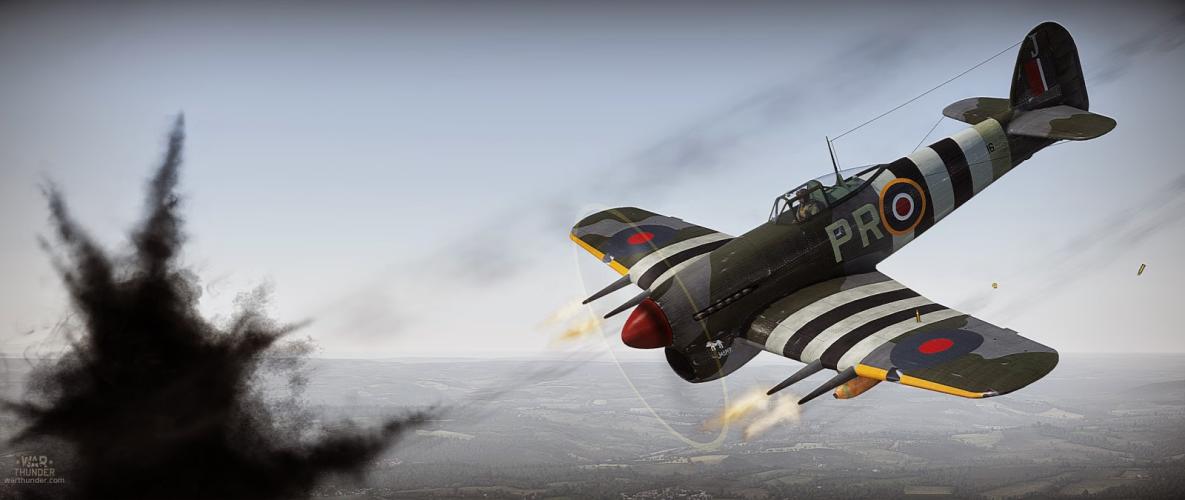
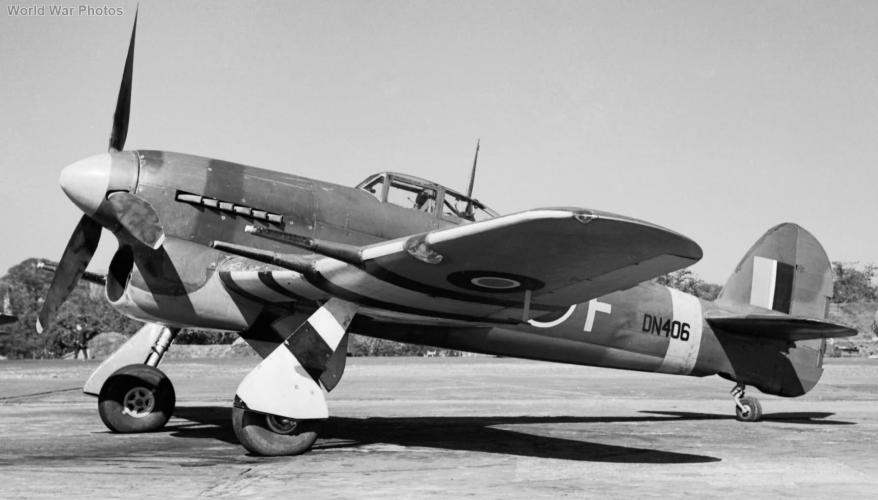
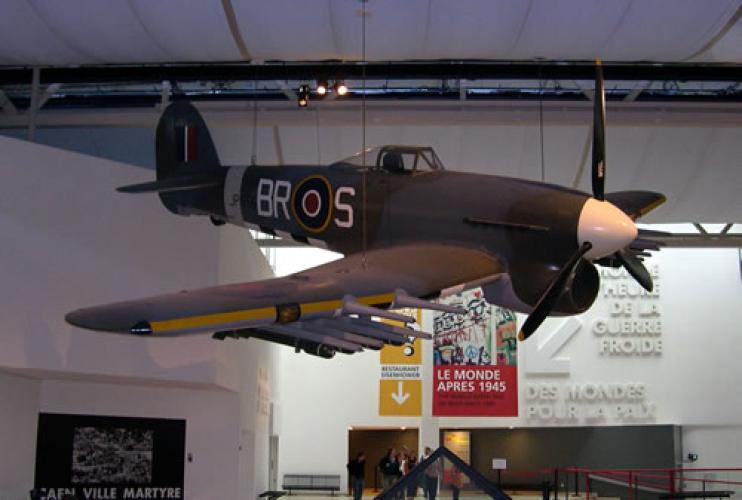
James Kingston Stellin was the son of James Stellin and of Beatrice Hart Stellin (nee Heard), of Lyall Bay, Wellington, New Zealand. He joined the RNZAF, became a pilot flying Hawker Typhoons . He was killed in action, 19 August 1944 after being hit by anti-aircraft fire (flak). As his damaged Hawker Typhoon fighter-bomber rapidly lost height, Pilot Officer Stellin struggled to avoid crashing into Saint-Maclou-la-Brière, a village of 370 people between Le Havre and Dieppe in northern France. He succeeded, but at the cost of his own life.
421875 Pilot Officer James Kingston (‘Joe’) Stellin, RNZAF, was one of several thousand New Zealanders who flew with the Royal Air Force over Europe during World War 2.
Born in Wellington on 2 July 1922, he was the son of James and Beatrice Stellin of Lyall Bay.
He attended Scots College before enlisting in the Royal New Zealand Air Force in 1942 and beginning pilot training.
On 3 June 1944, three days before D-Day, he and two other Kiwi pilots were posted to 609 Squadron, RAF, at Thorney Island airfield, Hampshire. Over the following month, 609’s pilots flew numerous missions over Normandy, targeting German radar stations, tanks and other vehicles. In early July the squadron moved its base to France, arriving at Plumetot, north of Caen, under shellfire and in mud and rain. For the next six weeks Stellin flew almost daily missions against German tank concentrations, strongpoints and motor transport in the Falaise area.
On 18 August, 609 Squadron’s Typhoons destroyed at least seven German tanks and 12 vehicles. Stellin flew again that evening, attacking vehicles on the Vimoutiers–Orbec road and setting five alight. On the 19th, 609 Squadron again targeted German transport trying to escape the Falaise pocket. At 8.30 a.m. Stellin took off from Martragny airfield, flying Typhoon JP975.
After destroying several tanks and trucks, Stellin’s aircraft was heading home when he asked permission to descend to attack a vehicle. He did not return to his formation and asked for a homing to find his way back to base. He was given a course but later reported that he was short of fuel. It is thought that his plane was hit by flak near Bernay. A teacher at Saint-Maclou-la-Brière, Monsieur Jacobs, described the scene:
It was 10 o’clock in the morning when the sounds of an aircraft in difficulties first made us look up. The plane was about 1500 to 2000 feet up and rapidly losing height. Suddenly, on realising the great destruction his plane would cause if it were to crash in the centre of the village, the pilot straightened up his plane with a vigorous and supreme effort, made a half-climb, then turning sharp left at an acute angle, it fell rapidly, crashing less than a mile away.
Stellin bailed out at the last moment, but his parachute failed to open and he was killed.
By the time villagers got to the wreck, a German Army unit was already examining it.
Stellin was lying face down nearby, and an officer was turning over the broken body with his boot. As an officer examined Stellin’s documents, a villager noted the pilot’s identity and serial number as a colleague asked what the Germans had in mind for the body. The officer said they could do what they liked with it.
The villagers were appalled and thankful. In a letter to Stellin’s parents in Wellington, received a year after their son died, a village spokesman described how Stellin had been wrapped in a white sheet, while the local cabinet maker built an oak coffin. The casket was draped in the commune’s flag before it was covered in flowers. After a Catholic funeral, the village of 350 marched to their cemetery with another 850 people from the surrounding countryside. Among them was a US serviceman being hidden from Germans by neighbours. Stellin’s effects were consigned to the Red Cross.
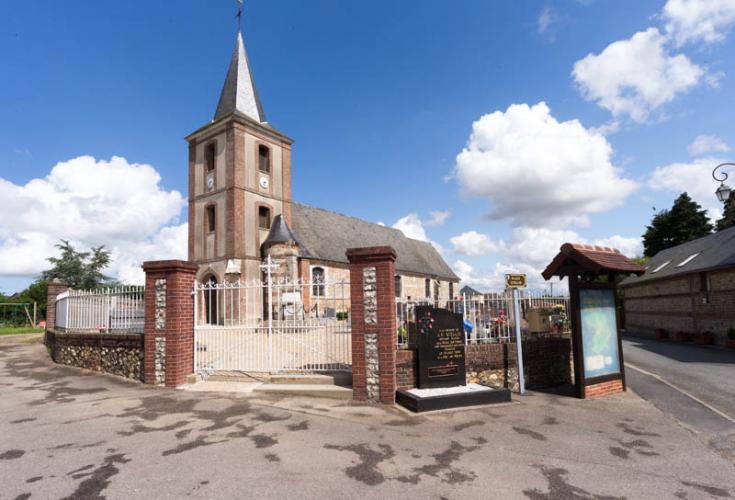
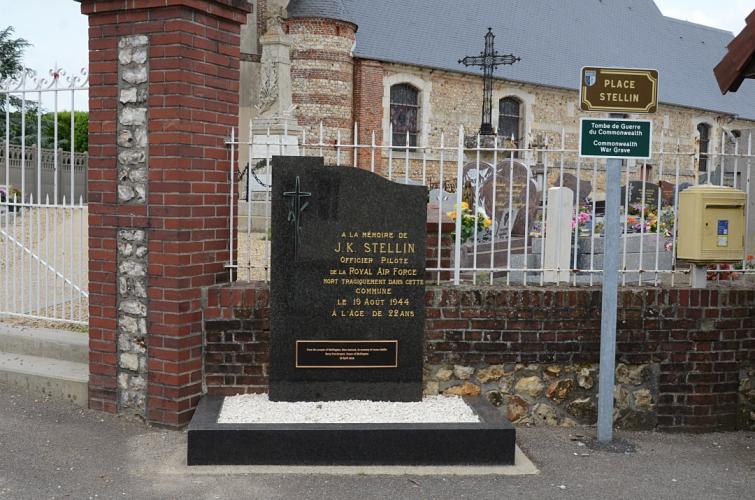
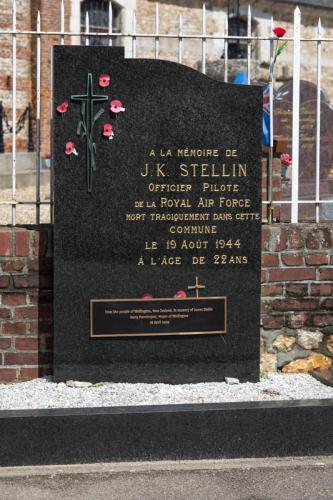
His remains are still at Saint Maclou-la-Briere. The village added his name to a memorial for French dead from the district. Later, they built a separate memorial in his name, and in 2001changed the name of the main square to Place Stellin.
His grave in the local cemetery was later designated a Commonwealth War Grave; ever since it has been decorated regularly with flowers. In 1946 M. Jacobs, who had been active in the local Resistance, wrote a moving letter to Stellin’s parents. The following year the Kiwi pilot was posthumously awarded the Croix de Guerre avec Palme. The people of Saint-Maclou-la-Brière later engraved Stellin’s name onto the war memorial for the dead of their own village. In 1964 they erected a black marble memorial stone to Stellin outside the gates of their church. In 2001 the area in front of the St Maclou church was named ‘Place Stellin’.
Locally James Kingston Stellin is also recognised at the Stellin Memorial Park, Northland, Wellington.